
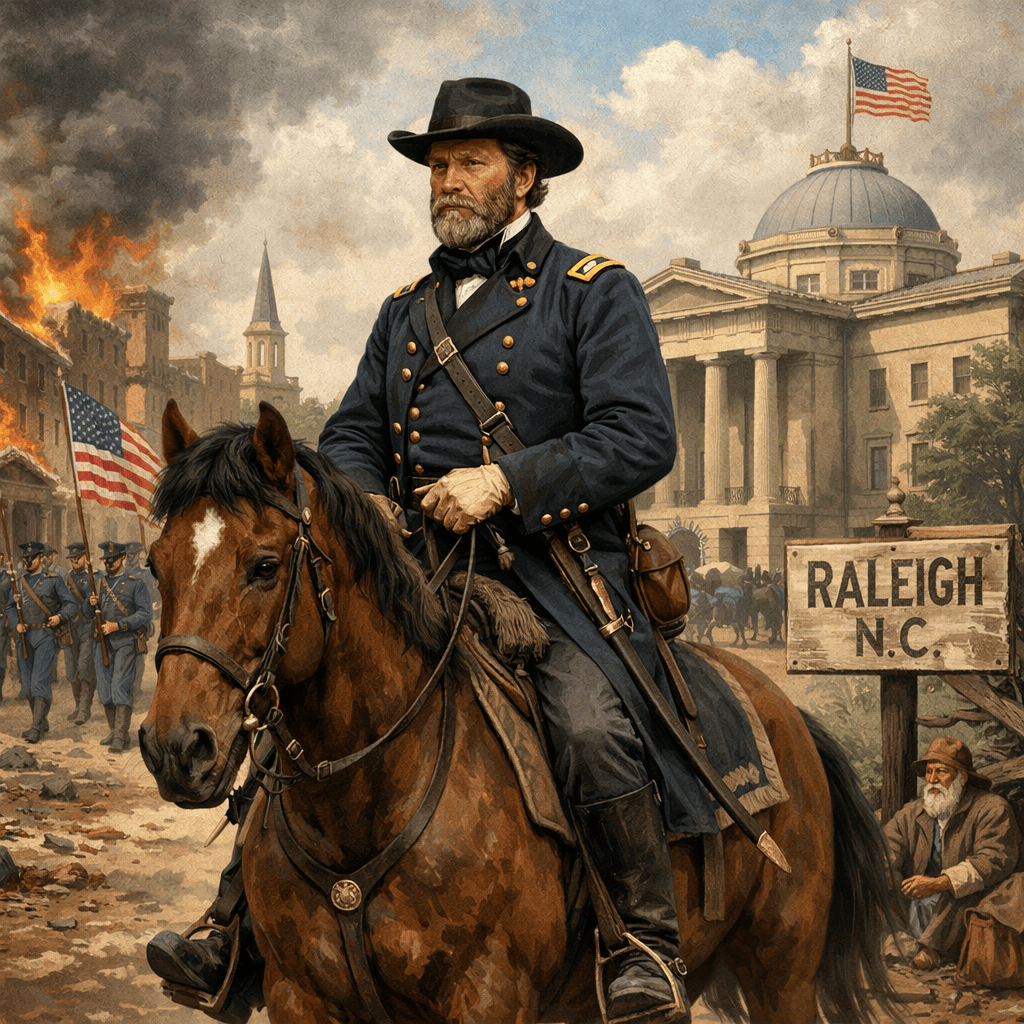
The Union soldiers were headed north from Savannah, destroying everything in their path. The South had been crushed, and it was time for the last remaining Confederate troops to put their weapons down. General Sherman was now in Raleigh only twenty miles east of Durham, and if surrendering didn’t happen, and happen quickly, Raleigh would be torched.
The last plan of attack for the Confederacy was for Confederate General Robert E. Lee to join Johnston in North Carolina, but that never happened. Instead, Robert E. Lee surrendered on April 9th, 1865 in Appomattox, Virginia to General Ulysses S. Grant. At this time, General Johnston had moved northeast from Columbia, South Carolina to Charlotte, North Carolina and finally to Greensboro.

Greensboro had become Johnston’s main headquarters because of its major railroad hub; the North Carolina Railroad that ran east-west, and the Piedmont Railroad that ran toward Danville, Virginia. In late March, Johnston tried to strike Sherman’s army east of Durham but was unsuccessful. Johnston retreated back to Greensboro, while Sherman’s army occupied Raleigh, North Carolina’s state capital.

So, it was here, in Greensboro, that Johnston came to the conclusion it was time to end the war. He had heard word that Sherman’s army was ready to burn Raleigh down if the Confederacy didn’t surrender. Even though President Andrew Johnson didn’t want Johnston to surrender, Johnston knew it was time.

The initial meeting at the Bennett House near Durham on April 17 was held privately, with only a few staff officers present. Sherman and Johnston discussed not only the terms of military surrender but also broader political questions about restoring Southern state governments. In this first meeting, Sherman proved willing to offer generous terms, including disbanding the Confederate armies, permitting soldiers to return home, and recognizing the existing state governments.

But once Sherman returned to Raleigh, he received news that Abraham Lincoln had been assassinated. And with the death of the president, the U.S. government rejected the terms that Sherman had initially offered Johnston.

Sherman was commanded to return to the Bennett House and ordered to renegotiate using only the Grant-style military terms. With no other option but to comply, On April 26th, Johnston surrendered the 89,000 soldiers under his command, making this the largest troop surrender of the Civil War.
The soldiers were paroled and allowed to return home. The officers were allowed to keep their side arms and the soldiers could keep their horses for spring planting.
Within weeks of the treaty being signed, the remainder of the Confederate Army surrendered, ending the Civil War.
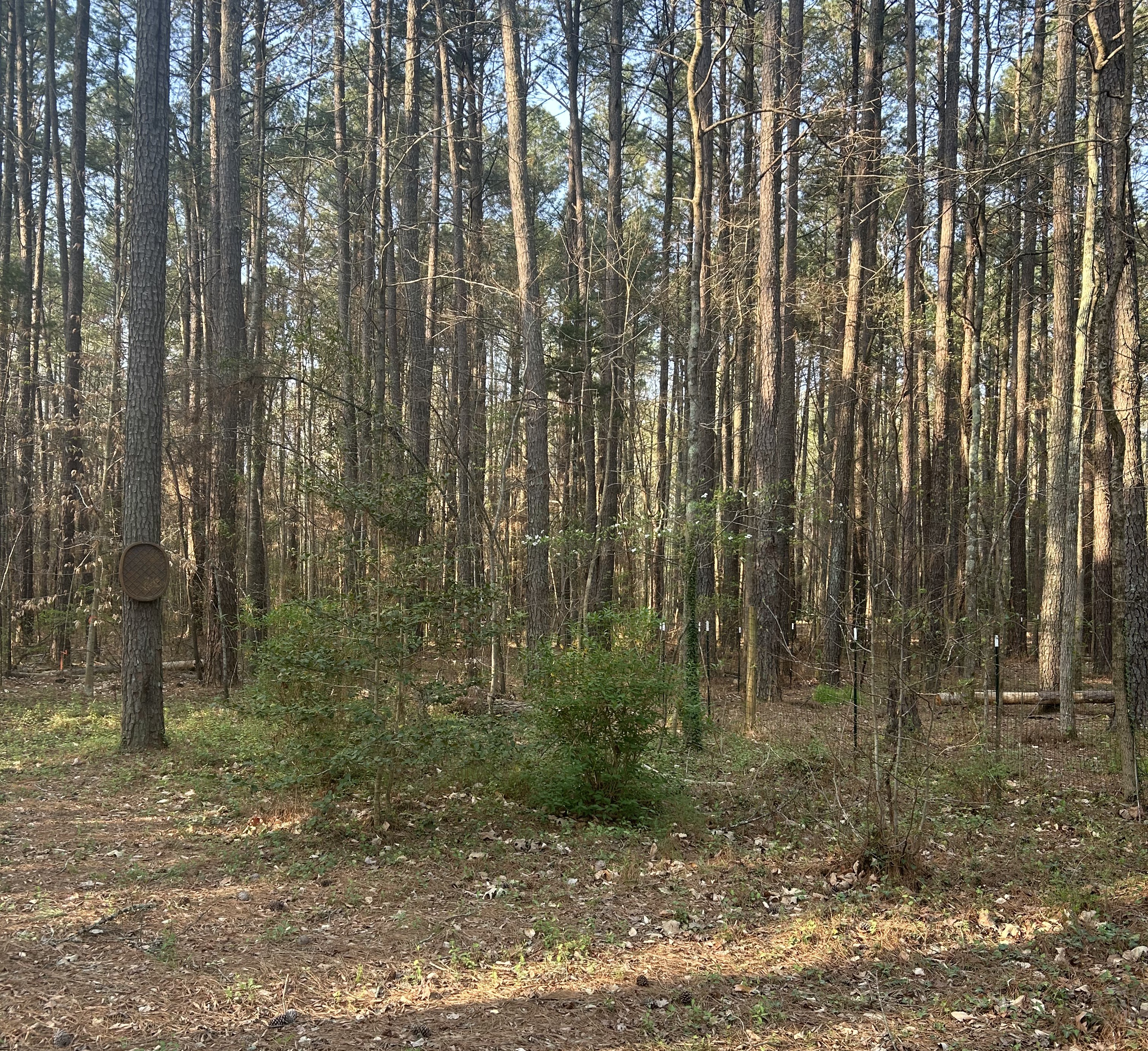
As I sit facing the woods of my back lot in South Durham, I can almost hear the men as they trample among the pine trees of Durham County. Men who have lived with suffering beyond my own understanding. Men who are practically bare from wearing the same clothes for years. Men with empty stomachs and parched lips. Men living in pain from injuries that for many, will become infected, leading to death.
None of them know what the next few weeks will bring. But as they lift their exhausted legs one more step, they can almost anticipate the ending of the deadliest war on U.S. soil.

Many stop and rest along New Hope Creek near what is now Stagecoach Road. And it is here, when the word of surrendering becomes more than a myth but a truth. Men on horseback ride up to tell them of Sherman and Johnston meeting at a house a little over fourteen miles away.
Some still want to keep fighting, but most long for home—and for human closeness they’ve gone without. A few arguments flare up, yet most of the men are too exhausted to think much beyond the moment they’re in.
Days pass with one day hearing the treaty had been approved and the next day, news of Abraham Lincoln’s death. A week passes of waiting. Spring sets in and with it, a hope emerges among the men.
Finally, on April 26th, a man on horseback, weaves between the trees and follows the creek to the camp. His words would resonate among the men for years to come. “The treaty has been signed. The war is over.”

